Two of our grandchildren will be voting for the first time in the upcoming midterm elections, but I doubt they’ll be asking for their grandparents’ advice. Politics isn’t what we discuss during family get-togethers–there’s a divergence of views, which always holds the possibility of an argument erupting, so this potentially inflammatory topic is carefully avoided.
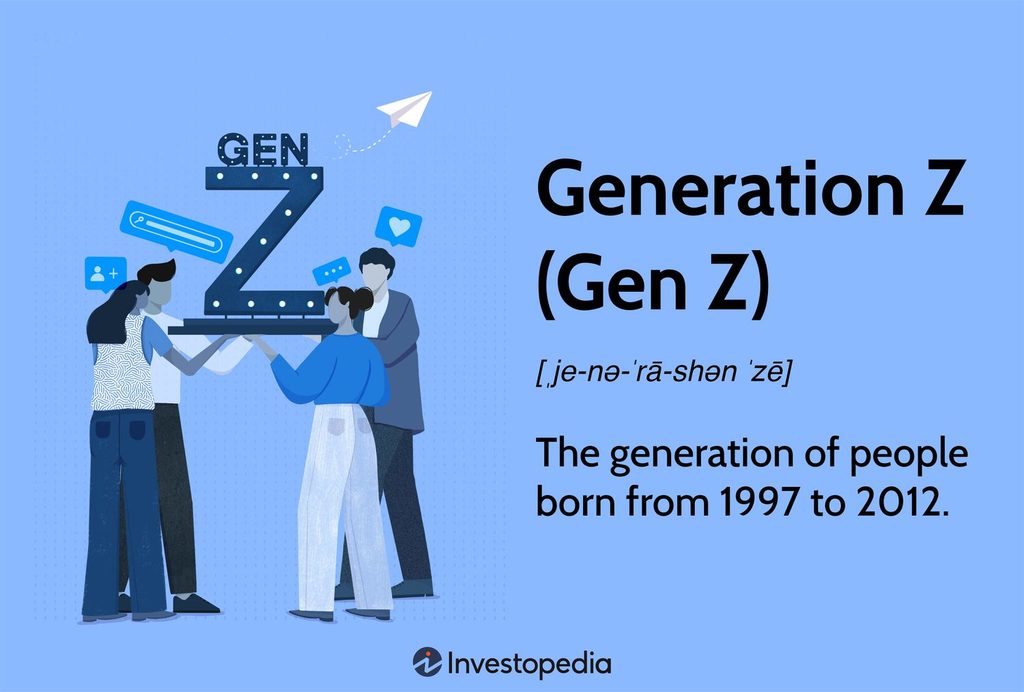
But I do wonder what’s in the minds of these two Gen Z-ers as they prepare for heading to the polls. Do they understand the difference between the two parties–or doesn’t that matter to them? What are they looking for in a candidate? Do they realize how much propaganda is being thrown their way via social media?
It all seemed so much easier in our generation. Way back then the delineations between the two parties were fairly clear: Republicans were for small government, with an emphasis on states’ rights and individual responsibility; Democrats were for large, centralized government and policies to benefit society at large.
Now that’s still the general idea, but the emergence of computers, cell phones, AI, and the resulting growth of mass media has led to a proliferation of confusing and misleading information, not to mention downright lies. So with all that’s plunging down the feed of their cell phones, how are these young people able to make informed decisions about the candidates they’re pulling the lever for?
If they’d ask us, this is what we’d say: to vote responsibly is going to mean a lot of homework. Research and more research. Looking at the issues from both sides. Trying to find the right sources of information. Thinking about what you believe and what you want out of life, not simply trusting what someone else says about candidate X and candidate Y. Ponder all this. Ask questions. Don’t fall for political propaganda, but search for the truth.
And try to find out more about both the Republican and Democrat parties. (P.S. Don’t ask Wikipedia. Don’t ask the Republican National Committee or the Democrat National Committee, because biases exist everywhere. You’ll have to work hard at this in order to be truly informed.)
First, we’d suggest, find out the facts on these two parties.
According to The History Channel, the Republican party was historically known as the “Grand Old Party” (GOP). “Founded in 1854 as a coalition opposing the extension of slavery into Western territories, the Republican Party fought to protect the rights of African Americans after the Civil War. Today’s GOP is generally socially conservative, and favors smaller government, less regulation, lower taxes and less federal intervention in the economy.”

The fact that the Republican party was founded as an anti-slavery party might come as a surprise to many if not most of today’s Gen Z-ers (not to mention the Gen X-ers and Millenials). But it’s historically true, and the party’s first president, elected in 1860, was Abraham Lincoln. It was his election that led to the Civil War and ultimately the abolition of slavery in the United States.
Other Republican presidents include Ulysses S. Grant, Theodore Roosevelt, Herbert Hoover, Richard Nixon, Ronald Reagan, George W. Bush, and Donald Trump.
Let’s turn to the Democrat party.
According to the Encyclopedia Brittanica, “The Democratic Party is the oldest political party in the United States and among the oldest political parties in the world,” tracing its roots to 1792, when the Federalist Party, led by Alexander Hamilton, favored a strong central government. Later the Federalist party would become known as the Democrat party, with its first president, Andrew Jackson, elected in 1829.
Other presidents over the years include Woodrow Wilson, Franklin D. Roosevelt, John F. Kennedy, Bill Clinton, Barack O’Bama, and Joe Biden.
Wait a minute, our Gen Z-ers might say–these historical facts are fine, but how do they relate to today? Both the Republican and Democrat parties have changed over the years.
Well of course they have. But this is how they were founded and we’re just trying to look at the facts, trying to set the groundwork. We can see from history that the two parties were strongly opposed to each other from the very beginning. In fact, Alexander Hamilton, who served as Secretary of the Treasury under President George Washington, was actually killed by his political opponent, Aaron Burr. The two argued about politics, which led to a duel, during which Hamilton’s bullet missed Burr, while Burr’s bullet struck Hamilton, leading to his death the following day.
But why, the Gen Z-ers may continue to insist, is this important?
It’s important because along the way of our unfortunately inadequate grade school, high school, and college education, the truth of history and the history of this country has been lost. It’s important to know how and why our country’s political parties were founded and then try and find out–if we’re to make informed decisions before voting–where they are today.
To get to that part, I’ll skip over the next hundred years or so–not even recommending reading some good books on political history, because that’s highly unlikely to occur today, for most people–and try to take a look at where the parties are now.
Our Gen Z-ers might object here, too, saying they don’t vote party, they vote for the person, man or woman, regardless of party affiliation.
And I’d counter with the fact that, unless a candidate is running as an independent, party affiliation makes a big difference, because he or she needs the funding and support of their party in order to get elected.
A little aside here on independent candidates: it’s fine that others are allowed to run in our elections and express their disapproval or differences with the party candidates, but they realize, as do, hopefully, most of the people who vote for them, that, except in the rarest of situations, they’re not going to win. (A list of third party and independent candidate performances in U.S. presidential elections can be found here.)
I can hear the potential of a long sigh here. “It’s all too complicated,” one of my grandchildren or their friends might say. “And all politics is corrupt anyway. I don’t think it matters who’s elected. I’m just going to stay home.”
Stay home and not vote? Not use the privilege you’ve been given to participate in a democratic republic? There’s only two words to describe that position: ignorance and laziness. Please don’t take that path. Yes, it’s work to figure out how to vote. But do the work!
Getting back to those two parties–what exactly do we know about them today? What do they stand for?
Let’s use two hot button issues today as an example: pro-life and open borders. If you’re somebody who thinks abortion is wrong, you might want to lean toward a Republican candidate, since a pro-life stance is in their platform, not in the Democrat’s. If you’re a believer in open borders, you might lean toward a Democrat candidate, as this is part of their platform, whereas the Republicans take a stricter stance on immigration.
But what exactly are the platforms of each party? You can check out the Republican platform here and the Democrat platform here.
Just take a close look at all the issues. we’d say to our Gen Z grandchildren. Think about and ponder them carefully, because those people chosen on November 3 to lead our government, both on state and national levels, will be hugely important in determining the direction of our country and your own future. Maybe like never before.
My challenge and question to them is this: will you take the privilege of voting seriously? Will you take the time to do the research?
The time to become a truly informed voter?